Understanding Forest Camping in United States Forest Landscapes
United States forest landscapes encompass more than one hundred fifty national forests administered by the U.S. Forest Service, alongside state forests, tribal woodlands, Bureau of Land Management parcels, and forested units within the National Park System. These lands span temperate rainforests of the Pacific Northwest, longleaf pine savannas of the Southeast, aspen groves of the Rocky Mountains, maple-beech hardwoods of the Northeast, and saguaro-studded sky islands of the Southwest. Educational travelers researching camping in United States forest lands benefit from treating forests as dynamic ecosystems managed for multiple purposes rather than as uniform wilderness backdrops.
Forest travel differs from urban or coastal tourism in ways that affect planning depth. Road networks include paved scenic byways and single-lane dirt tracks closed seasonally by snow gates. Trail maintenance priorities shift after wildfire, blowdown, and budget cycles. Wildlife presence varies by elevation band, season, and recent habitat disturbance. Cell coverage gaps span entire mountain ranges. Educational preparation emphasizes verification through official agency websites, Motor Vehicle Use Maps, trail condition bulletins, and ranger station conversations rather than assumptions drawn from outdated guidebooks or social media posts.
This guide presents general educational information about forest travel across the United States. It does not constitute personalized travel advice, guarantees of trail conditions, wildlife sightings, weather, facility availability, or safety outcomes. Always verify current conditions through official sources such as the U.S. Forest Service, National Park Service, state park agencies, and local ranger districts before departing.
Developed Campgrounds Versus Dispersed Forest Camping
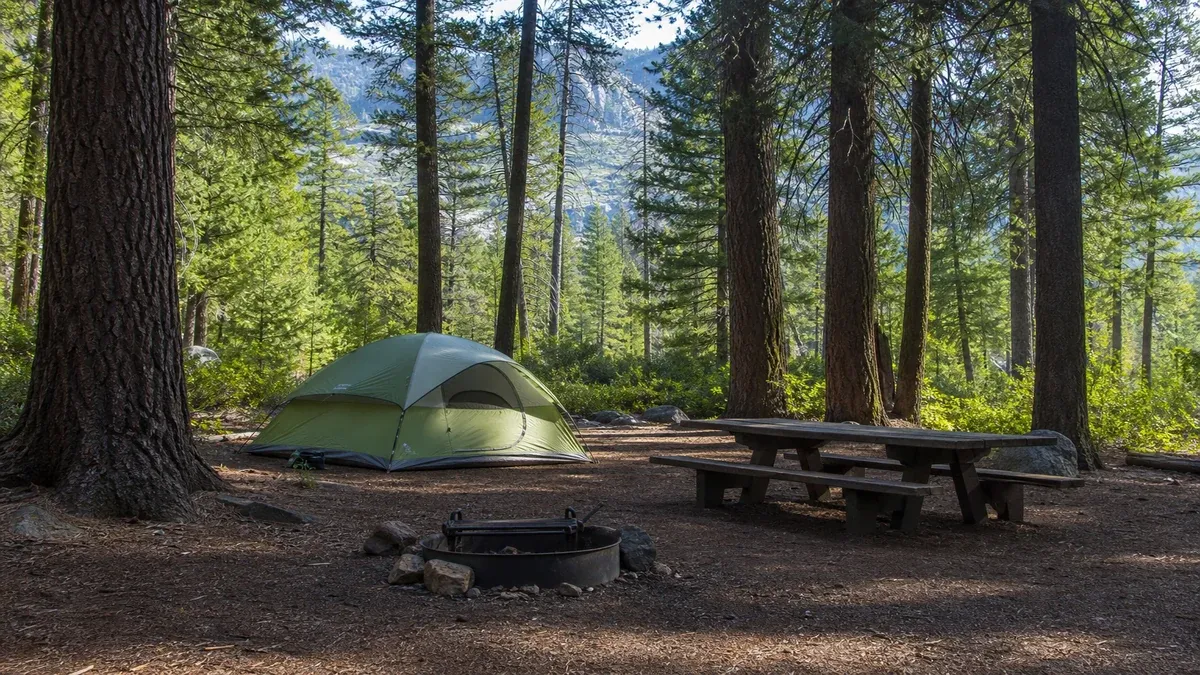
National forests offer developed campgrounds with varied amenities from full hookup RV sites to primitive tent loops with vault toilets and hand-pump water. Reservation systems through recreation.gov or private concessionaires manage many popular sites, while others remain first-come first-served with self-registration envelopes at entrance kiosks. Educational campers verify whether sites accommodate their equipment length, generator hours, and quiet time rules before arrival.
Dispersed camping allows overnight stays on many forest roads where local rules permit parking within set distances from water bodies and road edges. Dispersed use requires greater self-reliance: pack in water, pack out waste, and leave no trace of fire rings where prohibited. Not all forest roads allow overnight parking; day-use-only pullouts prohibit camping even when sites appear suitable at dusk.
State forest campgrounds adjacent to national forests may offer lower fees or different reservation windows while carrying distinct fire and OHV rules. Educational planning reads the specific agency page for each planned night rather than assuming uniform policies across jurisdictions.
Reservation Systems and Peak Season Demand
Popular forest campgrounds near national park boundaries, major lakes, and fall foliage corridors often sell out months ahead for holiday weekends. Shoulder-season midweek stays may offer availability when weekends fill. Cancellation policies vary; monitor recreation.gov for released sites when plans flexible.
Walk-in campgrounds without reservations create uncertainty after long driving days; identify backup campgrounds or dispersed options legal on nearby MVUM routes before departing when primary sites full.
- Book early for Memorial Day, July Fourth, and October foliage weekends in well-known forest recreation areas.
- Confirm campground open dates; many high-elevation loops close October through May.
- Verify RV length limits and low-branch clearance on access roads to forest campgrounds.
- Print reservation confirmations when cellular check-in kiosks fail in remote areas.
Site Selection, Leave No Trace, and Camp Setup
Choosing durable surfaces for tents and kitchen areas protects forest understory from compaction in popular dispersed zones. Camp at least two hundred feet from lakes and streams unless designated sites indicate otherwise. Avoid trampling wildflower meadows and cryptobiotic soil crusts in arid forest margins of the Southwest.
Kitchen setup downwind from sleeping areas reduces food odor concentration near tents in bear country. Store food, toiletries, and scented items in approved bear-resistant containers, lockers, or hung systems where regulations require. Never store food in tents or open vehicle windows at trailhead parking when regulations extend to day-use areas.
Leave No Trace principles apply in developed and dispersed settings: pack out all trash including micro-waste, use established fire rings only where legal, and dismantle unauthorized rock fire rings when safe to do so without spreading ashes into forest duff.
Tent, RV, and Hammock Camping Considerations
Tent campers assess ground slope, drainage during rain, and overhead dead branches called widowmakers before pitching. RV campers level rigs and secure awning arms before afternoon wind gusts common in open forest campground loops. Hammock campers confirm whether regulations allow tree attachment and use wide straps protecting bark.
Group camping in forest settings requires coordinating multiple tents within site capacity limits posted at developed campgrounds; exceeding limits stresses facilities and violates permit terms.
- Inspect sites for ant mounds and poison ivy before setup in eastern hardwood campgrounds.
- Use footprint or ground cloth only where permitted; some alpine sites prohibit extra ground layers.
- Secure lightweight items before storms; forest gusts through gaps in canopy surprise new campers.
- Carry repair kits for tent poles and stove components; forest roads delay store runs.
Campfires, Stoves, and Fire Restriction Compliance
Fire restrictions escalate during drought cycles, often prohibiting wood campfires while allowing gas stoves with shutoff valves. Restrictions publish on forest websites, entrance signs, and sometimes via text alert systems. Assuming last year's rules apply invites citations and unintended wildfire ignition from embers escaping rings.
Where campfires are legal, use existing fire rings in developed sites or established dispersed rings when permitted. Burn only dead and down wood collected locally without stripping live vegetation or transporting firewood across quarantine boundaries that spread invasive insects. Drown fires completely until coals cold before sleeping or departing.
Portable propane and iso-butane stoves provide cooking flexibility when wood fires banned. Alcohol stoves require caution on duff and leaf litter; clear small mineral soil patches or use stove boards.
Understanding Regional Fire Culture and Risk
Western dry forests face extreme fire danger during summer and fall; eastern humid forests still burn during droughts with escaped campfires among leading human-caused ignition sources. Educational campers treat every fire season seriously regardless of home region familiarity.
Smoking restrictions may apply during stage restrictions; fully extinguish cigarettes in vehicles when ground bans active.
- Check daily forest fire restriction level each morning of camping trips during dry months.
- Obtain campfire permits where California and other states require them even for propane in restriction zones.
- Never leave fires unattended; wind shifts through forest gaps accelerate flame spread unpredictably.
- Report illegal fire activity to rangers rather than confronting strangers unsafely.
Water, Sanitation, and Health in Forest Campgrounds
Developed campgrounds may provide treated water seasonally; spigots sometimes shut off during freeze periods leaving hand-pump or carry-in water requirements. Treat all backcountry and uncertain sources before drinking using filters, boiling, or approved chemical methods following manufacturer guidance.
Vault toilets and flush restrooms vary in maintenance frequency at forest campgrounds. Carry personal toilet paper and hand sanitizer when visiting dispersed areas. Cathole techniques apply where vault toilets absent; follow agency depth and distance guidelines from water.
Insect exposure differs by region: mosquitoes in northern lakes and southeastern swamps, ticks in eastern hardwood forests, biting flies in western riparian zones. Repellent, permethrin-treated clothing, and post-hike tick checks reduce risk without guaranteeing zero encounters.
Food Handling and Wildlife at Camp
Raccoons, rodents, and bears learn campground food patterns quickly. Lock food in vehicles only where permitted; some forests require canisters because bears break into cars routinely. Clean dishes immediately after meals and secure gray water away from tents when regulations address attractants.
Feeding wildlife intentionally or by leaving scraps violates regulations and habituates animals toward future conflicts requiring management removal.
- Use bear lockers when provided even for short overnight stays.
- Hang food only where allowed and using approved methods; many forests ban hanging as ineffective.
- Store scented sunscreen and lip balm with food supplies in bear country.
- Photograph food storage rules posted at campground kiosks for personal reference.
Winter and Shoulder-Season Forest Camping
Winter camping in forest settings ranges from plowed RV loops at low elevation to snowshoe-in sites requiring four-season tents and insulated sleep systems. Water sources freeze; plan melting snow with adequate stove fuel. Shorter daylight hours constrain setup time upon arrival at trailhead-access campsites.
Shoulder seasons bring mud, unpredictable snow at camp elevation, and closed water systems at developed sites. Campers pack extra tarps, warm layers, and flexible backup lodging plans when weather turns harsh on high forest plateaus.
Accessibility and Inclusive Camping Options
Some developed forest campgrounds offer accessible sites with paved pads, extended picnic tables, and proximity to accessible restrooms. Telephone campground hosts with specific measurement questions when booking filters insufficiently detailed online.
Adaptive outdoor organizations partner with forests for accessible camping events; research scheduled programs when standard site features inadequate for personal equipment needs.
- Request ground-floor or short-walk sites when mobility concerns exist in large campground loops.
- Confirm whether accessible restrooms remain open during shoulder season reduced operations.
- Plan flat paths to toilets when camping with children or mobility devices on uneven forest terrain.
- Document site numbers matching accessibility needs for future return trips.
Integrating Forest Camping With Multi-Day Itineraries
Camping centralizes forest exploration around one base reducing daily packing compared to hotel hopping between trailheads. Two-night minimum stays at a single campground often improve morning trail access and evening wildlife listening when safe and legal from camp.
Compare fuel, grocery, and ice availability near campgrounds before committing to remote multi-night stays. Some forest loops require fifty-mile drives to resupply, affecting meal planning and cooler capacity.
Campground Ethics and Neighbor Considerations
Quiet hours typically run late evening through early morning; generator and music noise carries through forest campgrounds with less ambient urban sound masking. Headlamp beams into neighboring sites disturb others; use red-light modes when moving at night.
Cutting through occupied campsites as shortcuts to trails disrespects privacy; use designated paths between sites and facilities.
- Observe fire ring sharing etiquette when sites include communal features in group areas.
- Report maintenance issues such as broken water pumps through host or recreation.gov feedback.
- Leave sites cleaner than found to support volunteer host morale on busy weekends.
- Teach children campsite boundaries and wildlife safety before first night in forest campgrounds.